

WooCommerce Support Call Routing AI: 60–70% Containment + Checklist
Automate WooCommerce phone support with an integration checklist, anti hallucination controls, escalation rules, and clear ROI benchmarks.


Yes, AI voice agents can resolve most routine WooCommerce support calls without ever transferring to a human. Voice agents can handle order status, returns, and shipping questions in real time, with reported faster response times and high customer satisfaction. The remaining calls, fraud flags, dispute, complex refunds, still need a person, but that’s a shrinking slice once the routing logic is tuned correctly.
TL;DR:
- Live order data integration is crucial, as cached information older than 30 minutes can lead to inaccuracies and customer frustration.
- Automation of order status, returns, and subscriptions should be prioritized, while fraud and dispute calls require immediate escalation to prevent legal risks.
- Proper setup of system APIs, including order lookups and carrier APIs, along with strict error handling, directly impacts the support system’s reliability and cost savings.
- Implementation should follow a staged rollout, starting with 20% WISMO routing, with continuous monitoring and tuning to ensure high containment rates and low escalation.
- Escalation protocols must include structured error handling, full context transfer, and immediate escalation of high-risk cases like fraud or payment disputes.
Table of Contents
- How Does Support Call Routing AI Actually Work?
- Which Support Calls Should You Automate First?
- What Does a WooCommerce Integration Checklist Look Like?
- What Does the ROI Actually Look Like?
- What Does a Safe Deployment Roadmap Look Like?
- How Should Escalation and Safety Controls Work?
- What Should You Expect in the First 90 Days?
- Ready to Automate Your WooCommerce Support Calls?
- Sources
- FAQ
How Does Support Call Routing AI Actually Work?
Getting this right depends on five components working together in real time, not five separate tools bolted onto each other.
- Speech recognition (ASR) converts the caller’s voice into text, often within a few hundred milliseconds for it to feel conversational.
- NLP and intent detection figure out what the caller actually wants, whether that’s “where’s my order” or “I need to return this.”
- Business logic decides what to do with that intent, checking policy rules before acting.
- OMS and carrier connectors pull live order and tracking data through APIs, not cached snapshots.
- Text-to-speech (TTS) turns the resolved answer back into natural-sounding speech.
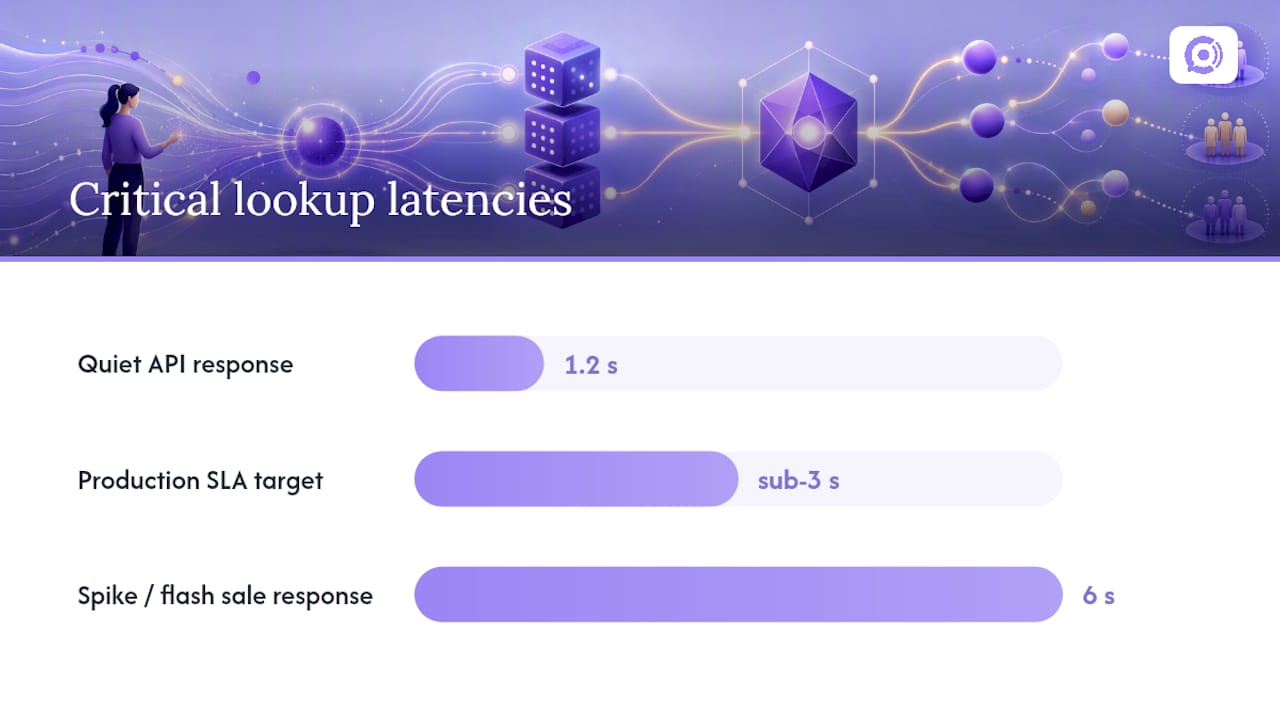
The OMS connection is where most systems fail quietly. A production-grade voice agent needs live, bidirectional integration with the order management system, logistics platform, and payment gateway. Cached data refreshed every 30 minutes produces wrong answers on a meaningful share of calls, because orders ship, get delayed, or get returned inside that window. Sub-3-second lookups matter because callers hang up or get frustrated past that point, and concurrency limits on your WooCommerce API can quietly throttle response times during peak call volume.
Anti-hallucination controls close the last gap. Voice agents run on strict system prompts that block them from ever inventing an order ID, tracking number, or status. When a backend call fails, the agent doesn’t guess. It triggers a structured error message that launches an apology-and-reverify script instead.
Pro Tip: Test your API response times under simulated call-volume spikes before launch, not after. A connector that returns order data in 1.2 seconds during a quiet Tuesday can slow to 6 seconds during a flash sale, and that’s exactly when call volume peaks.
Which Support Calls Should You Automate First?
Not every call type is equally ready for automation, and trying to automate everything at once is how pilots fail.
- Order status (WISMO). The agent identifies the caller, pulls the order by ID or email, checks the carrier API, and translates raw tracking codes into a plain-language answer. This is the easiest flow because it’s read-only.
- Returns and exchanges. These calls require checking return eligibility against policy rules, then generating a label, a write operation rather than a lookup. Resolution rates here typically run 15 to 20 percentage points lower than WISMO at first, simply because policy logic is more complex than a status check.
- Subscription changes and reschedules. Pause, skip, or reschedule requests follow predictable rules and automate well once returns are stable.
- Refund status checks. Straightforward once payment gateway data is connected.
Fraud flags, chargebacks, and “marked delivered but customer says missing” calls should escalate immediately. Those require judgment calls that carry real financial and legal weight. WISMO and returns together make up 60 to 70% of inbound e-commerce call volume, which is why that order of rollout, WISMO first, returns second, subscriptions third, captures the most value with the least risk.
What Does a WooCommerce Integration Checklist Look Like?
Before any voice agent takes a live call, your systems need to be wired up correctly. Skipping this step is the single most common reason pilots underperform.
WooCommerce API access:
- Order lookup by order ID, email, and phone number (callers rarely remember their order number)
- Webhooks for fulfillment status changes, so the agent isn’t polling stale data
- Customer account lookup for repeat-caller identification
Carrier and logistics integration:
- Parallel API calls to carrier tracking (UPS, FedEx, USPS, or your regional carrier) alongside the OMS status, since these two sources sometimes disagree
- A reconciliation rule for when carrier status and OMS status conflict (usually, trust the carrier for in-transit, trust the OMS for post-delivery disputes)
Returns platform integration:
- Label generation API access
- Policy engine access so the agent can check return windows, condition requirements, and restocking fees without guessing
Security and compliance:
- Scoped API keys with read-only access wherever a write isn’t required
- Transcript storage with access logging for audit purposes
- PCI-aware design that never lets the voice agent capture or repeat full card numbers aloud
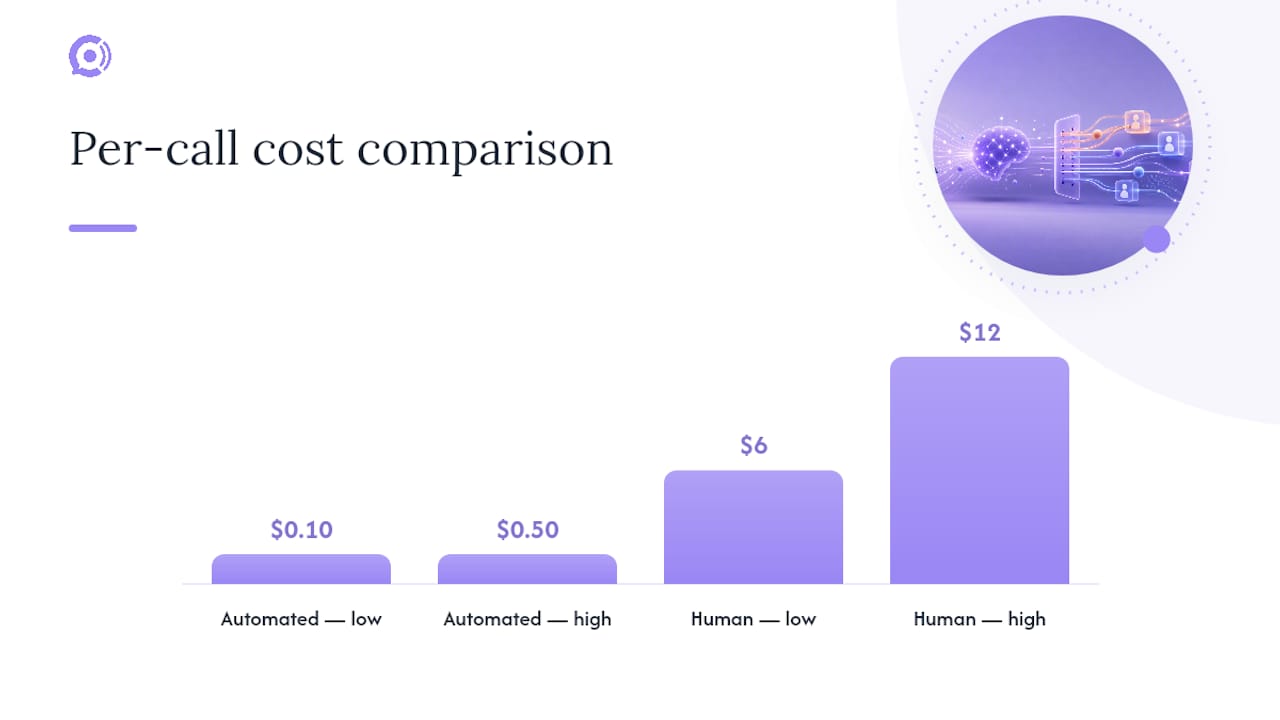
Automated voice interactions typically cost $0.10 to $0.50 per interaction, compared to $6 to $12 for a human-handled call. That cost gap only holds if the integration checklist above is done properly. A misconfigured connector doesn’t just fail quietly, it generates wrong answers that cost you far more in refunds and lost trust than the automation ever saved.
What Does the ROI Actually Look Like?
The math is simple once you have real containment numbers. Human-handled calls run $6 to $12 each in loaded labor cost, while automated interactions land between $0.10 and $0.50.
Track four numbers, nothing more, at least early on:
- Containment/resolution rate: the share of calls fully resolved without escalation
- Average handle time (AHT): automated WISMO resolutions often land under 90 seconds, versus 6 to 8 minutes for a traditional human or IVR call
- Escalation rate: how often the agent hands off, and why
- CSAT delta: satisfaction score compared to your pre-automation baseline
Blended workforce economics work in your favor here: your human team handles fewer, more complex calls, which can improve their own satisfaction scores.
What Does a Safe Deployment Roadmap Look Like?
Rushing a full rollout on day one is the fastest way to generate bad headlines. A staged approach protects both your customers and your data.
- Pilot at 20% routing. Enable a single flow, WISMO only, with a control group still routed to humans so you can compare outcomes directly.
- Review daily, tune weekly. Read call transcripts every day during the pilot; update prompts and policy rules on a weekly cadence based on what’s actually going wrong.
- Set scale triggers. Define the containment rate and escalation ceiling you need to hit before adding returns or subscriptions to the mix.
- Build the handoff layer. Warm-transfer scripts and agent dashboards that surface transcript context need to exist before you scale volume, not after.
This narrow-then-expand approach, starting with one predictable flow and expanding only once metrics hold, is what separates pilots that scale smoothly from ones that get shut down after one bad week.
Pro Tip: Set your control group before you launch, not after. Comparing “automated calls this month” against “human calls last month” ignores seasonal volume swings and will give you a misleading read on containment.
How Should Escalation and Safety Controls Work?
Escalation design is where most of the real risk in support call routing AI lives, and it deserves specific rules rather than vague good intentions.
- Structured error handling triggers an exact phrase, an apology plus a reverification request, whenever a backend tool fails, rather than letting the agent improvise.
- Warm transfers should pass full context: order number, intent, and a one-line transcript summary, so the customer never repeats themselves.
- Payment disputes, fraud reports, and anything with legal exposure escalate immediately, no exceptions, regardless of how confident the agent sounds.
- Monitor fallback rates and unusual escalation spikes daily; a sudden jump usually means an API changed or broke upstream.
The safest voice agents are the ones built to fail loudly and safely rather than guess convincingly. A structured error message that says “let me reverify that for you” protects the customer far better than a fluent, wrong answer ever could.
Clear IVR-style prompt design matters here too. Professionally written escalation narration keeps the handoff moment calm instead of jarring for the caller.
What Should You Expect in the First 90 Days?
Merchants running order-heavy WooCommerce stores with predictable return policies see the fastest wins, since WISMO and returns account for most call volume. Case study data and merchant testimonials specific to your store category are worth requesting directly before committing to a full rollout.
Ready to Automate Your WooCommerce Support Calls?
An AI voice agent solution can connect directly to your WooCommerce store, pulling live order data, tracking status, and return eligibility so callers get real answers instead of a hold queue. Unlike a general-purpose IVR system, it’s built specifically around WooCommerce’s order structure and return workflows, so setup doesn’t require months of custom engineering.

You can review exactly what the platform handles before committing to anything, or check the installation steps to see how quickly a pilot connects to your store. If you’re ready to see it against your own order data, start with the Orphora AI overview and request a walkthrough.
Sources
For deeper technical reading, see the voice agent order lookup guide, the D2C voice AI playbook, and smart call routing metrics for latency benchmarking.
- AssemblyAI blog: customer support voice agent order lookup
- Sthambh: Voice AI D2C e-commerce playbook
- Haptik blog: Voice AI for e-commerce customer support
- Omind blog: AI voicebot e-commerce support
FAQ
Can AI voice agents fully replace human phone support?
No. They resolve the majority of routine calls like order status and returns, but fraud, disputes, and complex refunds still need human judgment.
How fast can support call routing AI resolve a WISMO call?
Well-integrated systems often resolve order-status calls in under 90 seconds, compared to 6 to 8 minutes for traditional human-handled calls.
What does Orphora AI cost?
Pricing details and current plans are listed directly on the Orphora AI website.
How do you prevent the AI from giving wrong order information?
Strict system prompts block the agent from inventing order data, and any backend failure triggers a structured error and reverification script instead of a guess.
What’s the biggest mistake stores make when rolling this out?
Automating too many call types at once.