
Voice Bot Training Data: Why Read Speech Falls Short in Conversation
Choose voice bot training data for ASR, dialogue, or TTS with corpus examples, recording tradeoffs, and a practical collection and annotation plan.

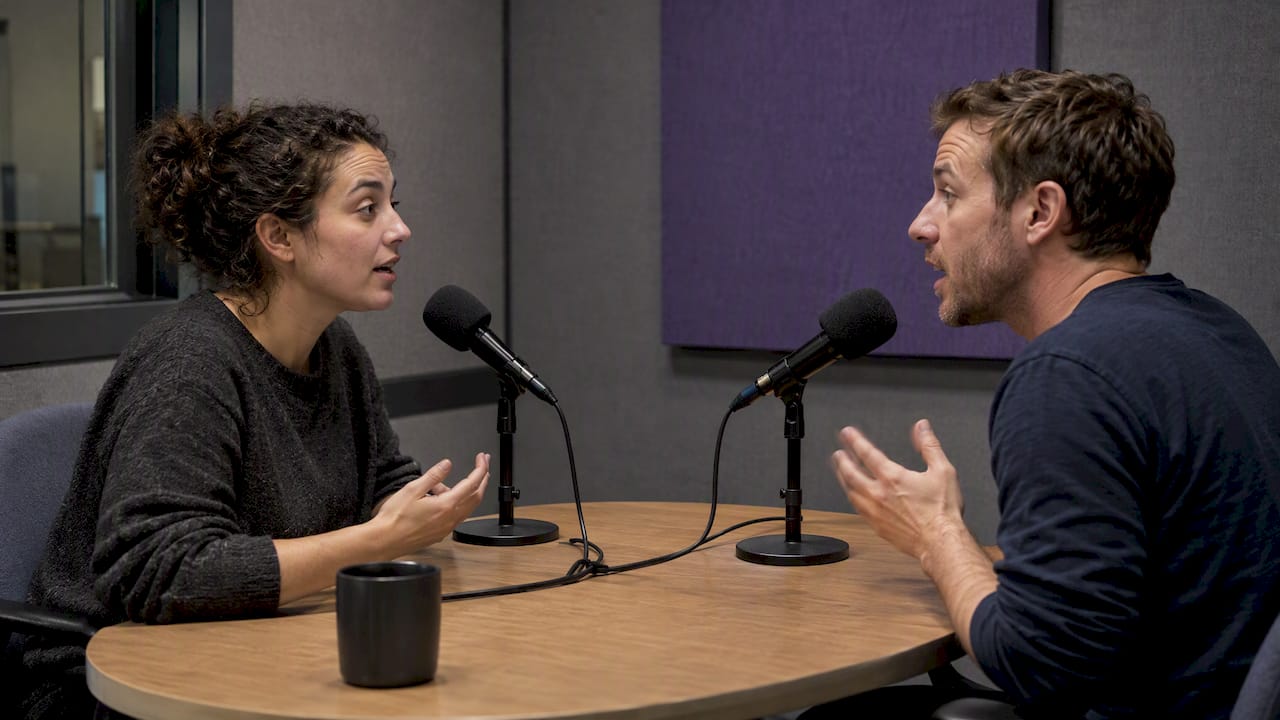
Voice bot training data is the audio, transcripts, and annotations used to teach a system to recognize speech, understand intent, and respond naturally. If you are starting from scratch, prioritize a conversational, full-duplex corpus alongside a clean transcribed ASR dataset, then run a small in-domain pilot before committing to a larger build.
TL;DR:
- Use Open Yap 1K for overlaps, interruptions, and backchannels; pair it with Mozilla Common Voice when broad multilingual read speech is needed for ASR.
- Choose 16 kHz for most ASR pipelines, but use 48 kHz source audio for expressive text to speech or voice cloning.
- Pilot with a few hundred annotated in house calls plus conversational audio; measure word error rate, sample DNSMOS, overlap, response time, and escalation before scaling.
- Collect domain specific calls using dual channel recording where possible, annotate speaker turns and intent, document consent, and redact personal information before training.
Table of Contents
- Which dataset types match which engineering goals
- Concrete datasets worth evaluating right now
- What quality metrics and metadata actually tell you
- Building an in-house collection and annotation pipeline
- How dataset choices show up in production voice agent performance
- The pragmatic call when time and budget are tight
- A faster path if you’d rather not build the pipeline yourself
- FAQ
- Sources
Which dataset types match which engineering goals
Different voice bot problems need different audio. A read, single-speaker corpus, where a narrator reads scripted sentences in a controlled setting, trains text-to-speech and voice cloning models well because the audio is clean and the prosody is predictable. It is a poor match for anything involving real dialogue.
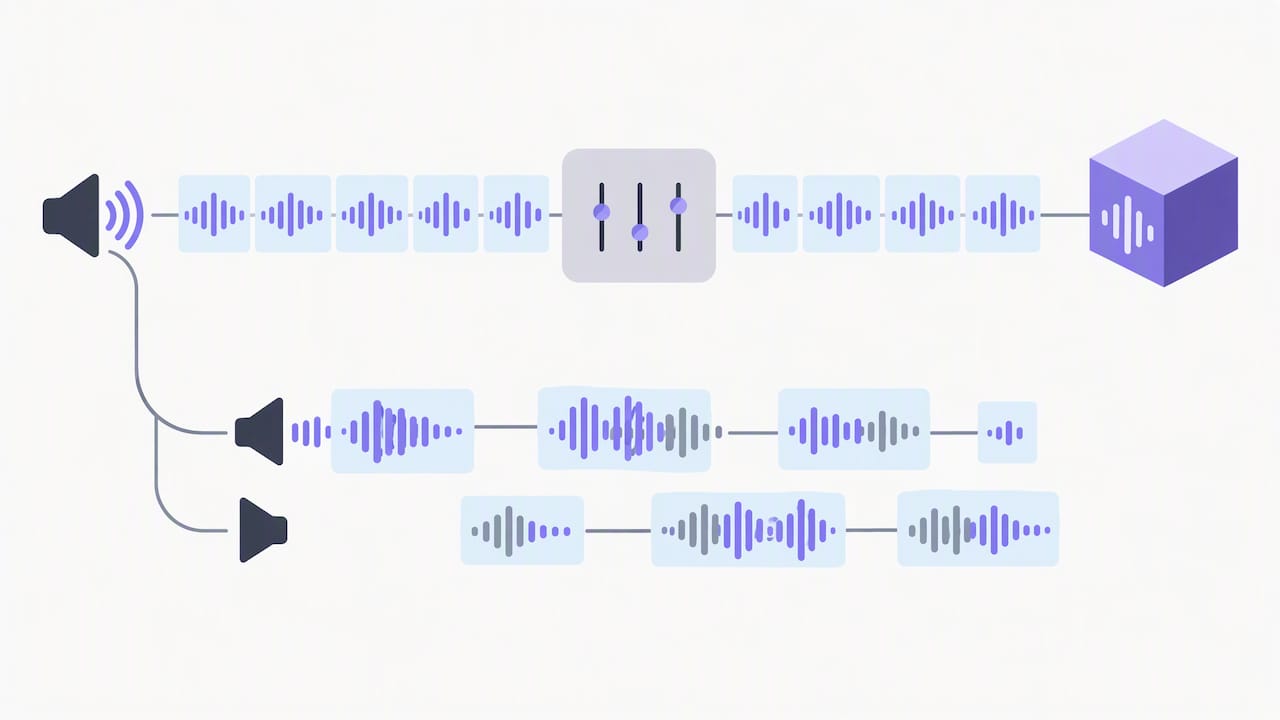
Spontaneous conversational and full-duplex recordings capture two people talking naturally, including interruptions, overlaps, and backchannels like “mm-hmm.” This is the data that teaches a voice agent when to speak, when to wait, and how to recover from a talked-over response. Without it, models trained only on polite, turn-by-turn read speech tend to break down in real-world conversational patterns, especially around sub-second latency and natural turn-taking.
Task-oriented dialogue and call-center corpora, where callers pursue a specific goal like checking an order or requesting a refund, are the backbone of intent and slot-filling models. These datasets usually include structured labels on top of the transcript.
Channel and bandwidth choices matter too:
- Single-channel recordings are common for ASR training and general transcription work.
- Dual-channel recordings separate each speaker, which simplifies diarization and turn-taking analysis.
- 16 kHz audio is standard for most speech recognition pipelines.
- 48 kHz audio preserves more detail and is preferable for expressive TTS or voice cloning work.
Concrete datasets worth evaluating right now
A handful of named corpora cover most early-stage needs, and checking their licensing and metadata before use saves rework later.
For full-duplex conversational modeling, Open Yap 1K is built specifically around dual-channel English conversation and preserves interruptions and overlaps rather than editing them out, which makes it a strong starting point for turn-taking policies. For broad multilingual ASR coverage, Mozilla Common Voice offers community-contributed read speech across many languages under an open license, useful when you need volume and language diversity rather than conversational nuance. For a general index of standard speech resources, OpenSLR catalogs many of the corpora the research community already relies on, with direct downloads and citations.
On the TTS side, NaturalVoice-derived datasets, including the PleasedPenguin naturalvoice_737h_48k release, publish per-utterance quality gating and metadata, which makes them useful for high-fidelity voice cloning work. Larger commercial collections, such as Datoric’s conversational TTS dataset, aim at expressive, large-scale voice modeling with rights-cleared licensing for commercial use.
Before adopting any of these, check:
- The license terms and whether commercial use is permitted.
- Total hours of audio and the sampling rate used.
- Whether per-utterance metadata (speaker demographics, device, transcript quality) is included.
Full-duplex corpora like Open Yap 1K are built to preserve natural conversational dynamics including overlaps and backchannels, which directly supports better turn-taking behavior in production voice agents.
What quality metrics and metadata actually tell you
Two datasets with the same hour count can perform very differently depending on what is attached to each clip. Sampling rate sets the ceiling on audio fidelity: 16 kHz is fine for most ASR work, but TTS and expressive voice models benefit from 48 kHz source audio. Hours of speech matter less than speaker diversity. A thousand hours from twenty speakers generalizes worse than a few hundred hours from a few thousand speakers.
Require these fields on every utterance before you use a dataset for anything beyond a quick experiment:
- Transcript and word-level timestamps.
- Speaker ID, age range, and gender where available.
- Recording device and environment notes.
- A perceptual quality score such as DNSMOS or a signal-to-noise ratio.
- Speaking rate, which affects how well a model handles fast or slow talkers.
Run three checks before committing to a corpus: train a small ASR baseline and measure word error rate, compute DNSMOS across a sample to catch noisy or clipped files, and audit overlap and backchannel rates if the dataset claims to be conversational. These metadata fields also drive your preprocessing pipeline directly: low sampling rate files may need upsampling decisions, inconsistent loudness needs normalization, and noisy environments are candidates for augmentation rather than exclusion.
Pro Tip: Before training on a new corpus, listen to twenty random clips yourself. Automated metrics miss problems a human ear catches in seconds.
Building an in-house collection and annotation pipeline
Public datasets rarely match your exact domain, so most production voice agents end up blending open data with a smaller, carefully annotated in-house set drawn from real call recordings.
- Record with a consistent spec: fixed sampling rate, dual-channel where possible, loudness-normalized, and captured across a range of real environments rather than a single quiet room.
- Decide between scripted prompts, natural conversation, or a hybrid. Scripted prompts are faster to collect and label but miss the messiness of real calls; a hybrid design that mixes a handful of scripted openers with free-form follow-up tends to work well for early pilots.
- Annotate for transcripts, word timings, speaker diarization, overlap tags, and intent or slot labels relevant to your domain.
- Run the pipeline in order: diarization, then noise removal, then ASR transcription, then human review, then semantic extraction using automated localization and multilingual voice production tooling. A Call2Instruct-style pipeline demonstrates this end to end, converting raw call center audio into instruction-style question and answer pairs suitable for fine-tuning, though it still requires careful anonymization before reuse.
- Document consent at the point of recording, redact or hash personally identifiable information, and keep provenance and license records for every batch you collect.
Pro Tip: Treat consent and anonymization as pipeline steps, not an afterthought bolted on before release. It is far cheaper to redact at collection time than to retrofit a dataset later.
How dataset choices show up in production voice agent performance
Dataset gaps show up as specific failure modes. Thin conversational coverage produces agents that step on callers mid-sentence. Weak domain vocabulary produces bad slot extraction on order numbers or product names. A read-speech-only ASR model produces higher error rates on real, messy calls.
A practical pilot sizing: a few hundred annotated in-house calls, paired with a slice of a conversational corpus like Open Yap 1K, is usually enough to surface these failure modes before a larger build.
- Test with live order lookups, not scripted demos, to see how the model handles real account data.
- Measure response time and escalation rate as your two primary signals.
- Compare error rates on in-domain vocabulary (order numbers, product names) against general ASR benchmarks.
A tight knowledge base also reduces the latency that annotation alone cannot fix, which is worth reviewing when you plan keeping knowledge bases compact alongside your dataset work.
The pragmatic call when time and budget are tight
Most teams overinvest in dataset volume and underinvest in conversational realism. A thousand hours of polite read speech will not fix an agent that talks over customers, but two hundred hours of real, messy, interrupted conversation often will.
Buy the slices you genuinely cannot collect fast, like multilingual coverage or large TTS volume. Everything tied to your specific domain, your product names, your actual callers, is worth collecting in-house even in small batches. Then iterate: flag the failure cases your pilot surfaces, add targeted augmentation, and retrain on the gaps rather than the whole set.
— Orphora AI
A faster path if you’d rather not build the pipeline yourself
If assembling and annotating a voice dataset sounds like more infrastructure than your team wants to own, we built our voice agents specifically for e-commerce stores running WooCommerce, with real-time access to order and customer data baked in rather than bolted on. That means the conversational and domain-vocabulary gaps described above are already addressed in how our agents are trained and deployed.

- Our agents handle common e-commerce customer questions around the clock without a human in the loop.
- Setup connects directly to your e-commerce store rather than requiring a separate data pipeline.
- Pricing runs at $9.99 per month per agent plus $0.10 per conversation minute, so you pay for usage rather than a long build cycle.
If you want to see how this performs against your own call patterns, you can review our voice agent features or request a pilot to test it against a small set of real customer interactions before committing further.
FAQ
What is voice bot training data?
Voice bot training data is the audio, transcripts, and labels used to teach a system to recognize speech, understand intent, and generate natural spoken responses. It typically combines read speech for TTS, conversational recordings for turn-taking, and task-oriented dialogue for intent and slot models.
Which dataset should I start with for a new voice agent?
Start with a conversational, full-duplex corpus such as Open Yap 1K to capture natural turn-taking, paired with a clean ASR dataset like Mozilla Common Voice for broad speech recognition coverage. Add a small in-domain annotated sample from your own calls before scaling further.
What sampling rate should I use for voice training data?
Use 16 kHz for most ASR and intent models, since that is the common standard for speech recognition pipelines. Use 48 kHz when training expressive TTS or voice cloning models, since the extra detail improves perceived audio quality.
How do I handle consent and privacy when collecting call recordings?
Document consent at the point of recording and redact or hash personally identifiable information before the data enters your training pipeline. Keep provenance and license records for every batch so you can trace where each sample came from.
Can I combine public datasets with my own call recordings?
Yes, and most production systems do exactly this to reach both scale and domain accuracy, often mixing public dialogue corpora with anonymized in-house data to improve performance on domain-specific vocabulary. The public data provides volume and diversity, while the in-house slice covers your specific product names and call patterns.
Sources
- Call2Instruct: Automated pipeline for generating Q&A datasets from call center recordings
- Mozilla Common Voice platform and dataset